This morning Raimund treated me with the following excerpt from a dramatisation of Mark Rothko as broadcast on the BBC...
What really caught my eye was the fact that here Allan Corduner's Mark Rothko differs so much from the portrayal of Rembrandt as done by Martin Freeman. Whereas Martin Freeman portrayed a human being still alive and surely not a figure of art history, Mark Rothko appears to be almost absorbed by being already some historic person, i e he has taken one decision and laments the fact that there is apparently no way back for him. He is Mark Rothko and he has to face all these people, i e gallerists, critics etc, and even more serve all of them. Apparently he has to stick to this one road he has chosen till the, in his case bitter, end. Rembrandt, certainly thanks to the wonderful Martin Freeman's decision to portray him as someone real, in Nightwatching on the other hand is much more alive and actively takes decisions, even such that would get him into big trouble with all the people he like Rothko depends upon. Maybe just maybe this is also the really big difference between the actual Rembrandt and the actual Rothko...Maybe in today's world artists do get more thoroughly corrupted by the art business. Thanks Raimund
"......Be what it is, The Action of my life is like it, which I'll keep if but for sympathy."
Showing posts with label Nightwatching. Show all posts
Saturday, 10 March 2012
Thursday, 27 October 2011
Nightwatching VII
or where is the place of the artist?
As for the social status of the artist there is an interesting point raised in this movie, when first of all Rembrandt is confronted with his (humble) origins as a miller's son from Leiden, but yet more interestingly yet, when socially higher ranking people (his orderers) imply that he has dirty hands - though he proves to them that at that moment and in this situation they actually are as clean as theirs.
In a consequence the artist falls inbetween the working classes, having to live of their hands' work, and the ruling classes, who do not get their hands "dirty" and rather living of their prestige and intellectual/ financial background. I surely love the idea that the artist is the one, who by his own choice does not distinguish between those two possible attitudes/ ways of living, but he is the one incorporating both, thereby living what Derrida would call the "and/or" rather than the "either/or".
As for the social status of the artist there is an interesting point raised in this movie, when first of all Rembrandt is confronted with his (humble) origins as a miller's son from Leiden, but yet more interestingly yet, when socially higher ranking people (his orderers) imply that he has dirty hands - though he proves to them that at that moment and in this situation they actually are as clean as theirs.
In a consequence the artist falls inbetween the working classes, having to live of their hands' work, and the ruling classes, who do not get their hands "dirty" and rather living of their prestige and intellectual/ financial background. I surely love the idea that the artist is the one, who by his own choice does not distinguish between those two possible attitudes/ ways of living, but he is the one incorporating both, thereby living what Derrida would call the "and/or" rather than the "either/or".
Wednesday, 12 October 2011
Nightwatching Part VI
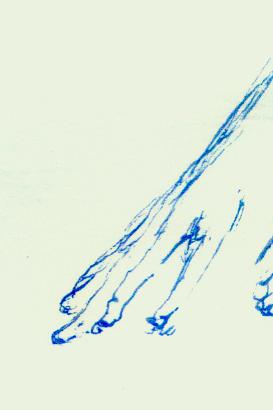
The acting in this movie is so inspired and inspiring that from a mere still my imagination drove me to draw this gesture, as I was wondering what was going on outside the frame.
This is the actual screen capture
I suppose soon this person will take some action, To be or not to be and he looks like chosing the active not being part, taking arms (his special ones) against a sea of troubles and by opposing end them...
This is the actual screen capture
I suppose soon this person will take some action, To be or not to be and he looks like chosing the active not being part, taking arms (his special ones) against a sea of troubles and by opposing end them...
Saturday, 8 October 2011
Nightwatching on a special night
Sunday, 2 October 2011
Nightwatching Part IV
Spending a portion of the night outside I've realised that we, modern people, can never ever regain the night, for we have abolished it by conquering it with light. Even on such a moonless night when the moon has set early, it is still lit by our artifice/artificiality and yet I can surely feel the longing. I hope that some of you have been more lucky, even if the police interfered ;). Thursday, 22 September 2011
Nightwatching - Visual References (at least one that I have noticed)
I should have noticed earlier but Martin Freeman wearing those various hats as Rembrandt should have reminded me of a painter I admire a lot - in fact if I were to write my own little art history he would feature in one line from Turner to Newman, the marvellous and hilarious James Ensor.
BTW the first thing that won me for Ensor before realising his mastery in painting and colour, was his wry sense of humour, that truly befits an artist. And especially the way he takes it out on himself personally.
Encounter his Self-portrait in 1960.
BTW the first thing that won me for Ensor before realising his mastery in painting and colour, was his wry sense of humour, that truly befits an artist. And especially the way he takes it out on himself personally.
Encounter his Self-portrait in 1960.
![]() |
| James Ensor, Self-Portrait in 1960 |
Sunday, 18 September 2011
NIghtwatching - The Opening Scene
Watching the opening scene I could not help but draw some iconographic parallels, which might sound a little bit blasphemous but as I will prove, been a topos rather commonly to be found among artists. The thing that came instantly to my mind is due to the fact that I have a Catholic background, how Christ is robbed of his clothes, even down to the fact that the only thing left to him to cover/shelter himself is a loincloth. Artists referring to Christlike figures or assuming that role has precedences like Dürer's self-portrait or Barnett Newman's Stations of the Cross, entitled "Lema Sabachthani"(Why have you forsaken me), which are certainly meant as any man's and especially the artist's primary outcry...
Friday, 16 September 2011
Art=Sublimation or The Sublime Is Now (Barnett Newman)
I still write a little every day: only a little, but I do write. And then in the evenings Levitan might come knocking at my window - 'Are you there, crocodile?' - and I let him in and we talk. He has terrible fits of melancholy these days, but if I tell him a funny story he rolls on the floor with pleasure and kicks his feet in the air. But his work is deteriorating: he no longer paints with a feeling of youth, but with a sort of bravura. I think the women have worn him out. It's impossible to paint a landscape without a feeling of pathos, of ecstasy, and ecstasy is impossible when you've gorged yourself. If I were a landsacpe artist I'd live quite an ascetic life: I'd have intercourse once in a year, and I'd eat once a day. Anton Checkhov, as quoted by the lovely Michael Pennington in his play "Anton Checkhov", cf Are You There Crocodile?-Inventing Anton Checkhov" by Michael Pennington, p 269.
Monday, 5 September 2011
Thursday, 1 September 2011
Nightwatching - The Act of Recognition
I've been thinking a lot about eroticism for several reasons. What I've come to find is that it can but happen when people start perceiving the other/ the fellow as a completely different entity. There is no way you can even touch this but for the miraculous moment when we recognise each other. And in this way the biblical metaphor of "recognition" ceases to be one, the veil is withdrawn, and the recognition becomes the act of conception. To Freud eroticism is the life-giving principle. (Solness and Hilde must feel the same btw)
This is my erotic song for the day. Just like splitting the money and seeing it through...
Wednesday, 31 August 2011
Tuesday, 30 August 2011
Nightwatching Part V
Visualising it
Oh, colour I adore. I can see from the movie that Peter Greenaway simply knows what he wants and how he wants the picture to look like. The hardest thing is yet to hunt for the perfect resemblance between vision and product.- Once when I was designing a poster for my school's English Drama Group and I knew the colour had to be violet and I stated so to other people, yet for lack of the colour I did it in blue. Now comes the funny part, one of us went to have the poster colour-copied, when I got a call saying that the copy cannot be done in exactly the hue but it had to be tinted, either red or yellow (it's been decades I wonder if I remember the other colour correctly). Absolutely excited I said, "For god's sake, red!" When the posters arrived, they were exactly like I had envisioned them and even the other people finally saw it - With this movie I also feel that the vision - like eg the blue and yellow of the flag (it takes my breath away) - has been translated.
Having Rembrandt in the drapery commenting on the fabric, its colour and texture - I can relate to this so very much, if I myself do this, it's pure synaesthesia, to touch it, to smell it, the colour . It's like being high on this, these are my drugs.- This is something that has happened to me before when watching a Greenaway movie, eg in The Cook, the Thief.... when the wife and the lover have sex between the rotting flesh, I definitely could smell this strange sweet odour of rotting and my husband on the other hand thought that the lover looked quite tasty in the end :)
Oh, colour I adore. I can see from the movie that Peter Greenaway simply knows what he wants and how he wants the picture to look like. The hardest thing is yet to hunt for the perfect resemblance between vision and product.- Once when I was designing a poster for my school's English Drama Group and I knew the colour had to be violet and I stated so to other people, yet for lack of the colour I did it in blue. Now comes the funny part, one of us went to have the poster colour-copied, when I got a call saying that the copy cannot be done in exactly the hue but it had to be tinted, either red or yellow (it's been decades I wonder if I remember the other colour correctly). Absolutely excited I said, "For god's sake, red!" When the posters arrived, they were exactly like I had envisioned them and even the other people finally saw it - With this movie I also feel that the vision - like eg the blue and yellow of the flag (it takes my breath away) - has been translated.
Having Rembrandt in the drapery commenting on the fabric, its colour and texture - I can relate to this so very much, if I myself do this, it's pure synaesthesia, to touch it, to smell it, the colour . It's like being high on this, these are my drugs.- This is something that has happened to me before when watching a Greenaway movie, eg in The Cook, the Thief.... when the wife and the lover have sex between the rotting flesh, I definitely could smell this strange sweet odour of rotting and my husband on the other hand thought that the lover looked quite tasty in the end :)
Sunday, 28 August 2011
Nightwatching - Truth in Painting
Like I've mentioned before I do not believe that movies could ever picture the historical facts, nor do I believe that it was predominantly intented in Nightwatching. To me the whole plot tells a story
that might have been approximately like this or not.
Yet this does not imply that the movie is not telling the truth about its subject, ie Rembrandt and the story of the creation of a work of art. To me the historical murder story is just a subplot, a parergon, that enables Greenaway to discuss deeper relationships, eg between life and art or sexual desire and art or art and the art market, art and money. Maybe even down to the question if the artist is only just a craftsman and that he sometimes lacks intellectual capacities.
Some of the really telling scenes are the opening scene, the scene when Rembrandt is asked to show his hands, and the ones that touched me personally the most Saskia's death and the mating with Hendrikje, there is a feeling of apotheosis to this one, very delicate and very beautiful indeed.
that might have been approximately like this or not.
Yet this does not imply that the movie is not telling the truth about its subject, ie Rembrandt and the story of the creation of a work of art. To me the historical murder story is just a subplot, a parergon, that enables Greenaway to discuss deeper relationships, eg between life and art or sexual desire and art or art and the art market, art and money. Maybe even down to the question if the artist is only just a craftsman and that he sometimes lacks intellectual capacities.
Some of the really telling scenes are the opening scene, the scene when Rembrandt is asked to show his hands, and the ones that touched me personally the most Saskia's death and the mating with Hendrikje, there is a feeling of apotheosis to this one, very delicate and very beautiful indeed.
Saturday, 27 August 2011
Friday, 26 August 2011
Nightwatching material IV
Peter Greenaway has identified Rembrandt's eye in the Night Watch, in fact this is the final image we are getting. Being a very visual person like Greenaway I can definitely see the point, though our view on the phenomenon of the painting may differ, in that he is looking for a story the painting is telling in its (historical) context whereas I am asking what is it telling me now, what impact does it have on my personal life, what is its eternal present.
Anyway Arthur C Danto, whom I had mentioned in the other post, in his gedankenexperiment and its conclusion is also referring to Rembrandt's eye, so we have basically the same move from the Night Watch to Rembrandt's eye. Danto explains that what distinguishes the original work of art always from the no matter how perfect copy is the artist's eye. In Rembrandt's case, it is to Danto his loving and caring look - especially in his drawings of Hendrikje - in which he shows everything even the signs of physical decay, but never exposes them.
Thursday, 25 August 2011
Wat is kunst? - de blik in zijn ogen -dat is kunst
Oh my god, I've been staring at this sketch for almost an hour now and I cannot stop. What have I done? I cannot come to terms with it, I'm seeing all at once; every detail and the whole at the same time. Usually I'm very bad at sketching or drawing, simply awful and I never catch what I intended. At the academy people kept repeating I should try drawing, but I am a painter, it's colour, painting it layer for layer almost shining through what I'm interested it - it's a passage.
Yet what have I got here, the expression on the face is forward and closed at once, there are in fact two faces to be seen, one painted, superficial and the other that is more true, a person facing you. It's looking at me and it is telling me something about himself, yet it is also an entity I can never fully grasp or define. I cannot possess this person. On a more formal basis I'm also seeing both at once, the (concrete) lines that make up the (abstract) face, I've tried to concentrate on the single aspect, it's hard to achieve, because every time I do I just realise how those lines fit in perfectly and none is too much and there is no line missing. Everything falls in place, like it was planned from the beginning of all time.
Then I had to realise that Michael is still right, I could spend a decade or hundred years trying to resketch this - I will never achieve it. Arthur C Danto's gedankenexperiment of the computer recreating by chance Rembrandt's Nightwatch - yes in the book The Transfiguration of the Commonplace it is the Nightwatch! - for me is now resolved: even if there was a painting computer who would have the time to try for aeons, it would never make it happen because every single line, decision by the artist - or in fact by whomever - is the product of the most singular present/ presence, and this presence/ present is almost a nothing, a strange point - with the mathematical extension of nil - inbetween the past and the future. Nothing one could actually grasp, try to catch the moment, and then think about the fact that scientist's are saying that our brains are always a tick behind the now.
Wednesday, 24 August 2011
Nightwatching Part III
Peter, I've been listening to an interview, where you stated that you do not particularly like Rembrandt van Rijn - an interesting contrast to Martin Freeman's perception he reveals on the DVD extras btw. Fact is I can definitely see why you do not actually love this person - pompous, self-absorbed. It reminded me of the fact that I used to paint monochromic abstract paintings just in red for several years, and only one single hue of red btw. As it was at the academy and people were passing by, this was noticed of course. So one day somebody commented: "You must be loving red"."On the contrary", I replied," I hate it, but that is fine because this way I can do whatever I like to it". Yet the outcome and truth was more complicated since by the end I was adoring red.Maybe it's just Martin Freeman's excellent portrayal and the way he really achieved what he declaredly set out to do, which was play Rembrandt like a real person struggling with everyday problems and not the iconic painter, that made me feel deeply for this man - at the end I must admit I was in love. Yes, he is pompous and self-absorbed and frankly losing so much touch with reality as to set out to publically insult or accuse his powerful clients, makes it even worse. Self-indulgent idiot, who must show off his intelligence and who believes that nobody can get at him. And yet this is only one side, isn't it?! He could be Hamlet shouting out "Something is rotten in the state of Denmark (the Netherlands)" and there is the moral disgust he is feeling at actually the same issues Hamlet is facing, murder, double moral standards, incest, colonialism. No, Amsterdam was not a nice place to live in and revealing it this openly - at least as far as the plot of this movie is concerned (I won't be commenting on wether I believeit to be historically correct because that's not a point that seems important to me, as this movie is a work of art and that's how it should be treated - anybody watching a movie and saying, yes ,this is the way it was, is a moron to me, sorry) - needs a disgusted and courageous person with high moral standards. So now we've got to a quite interesting point, something that varies from the usual perception of an artist as a morally at least questionable person, like in Anton Walbrook's favourite poem by his great-grandfather Wilhelm August Wohlbrück, it is the artist, who is just in giving each person his true deserts. I surely love the image of the eye at the end, and yes Peter, here you are right, we should learn to employ it properly and not superficially, and maybe I fancy also the idea that this eye might be love. Once more Martin Freeman is simply amazing in giving his character exactly this contradictory depth.
Monday, 22 August 2011
Sunday, 21 August 2011
Nightwatching - have you ever done it?!
Come to think of it, it is really hard to find a location in Europe, where one might actually watch the night, as it was intended to be. The only time this has ever happened to me was in a very remote place, Dartmoor, in the middle of nowhere. Never before and never again I've seen this darkness in nature and never shone the stars as bright and were as close as at this instance.
Darkness, blackness is of course an issue that several artists have been intrigued by , e g there was the story of Joseph Beuys, who allegedly - I haven't actually been there - found the darkest black sooty stovepipe, he once put into a wall.
To me personal there can be a lot happening in dark spaces, like in Barnett Newman's Prometheus Bound, there is a whole drama hidden in it, and something I heard btw also, when I first encountered it there was a flourish, and every painting else got obsolete, I was absorbed. The second time I visited it during a retrospective in Düsseldorf, I spent a considerable time in front of it. Apparently too much for the museum attendant, who got behind me - like Newman suggests I always get as close as possible. The exhibition had been on for some time, so the painting should not have been that new to the attendant, yet suddenly I heard a yell behind me: "Kommt schnell, da ist was, ich habe was gesehen/ Come quickly, there is something I've seen something." I couldn't help but turn, smile at her and be a little bit jealous at this marvellous moment of discovery. She was absolutely right and absolutely right to yell in the museum. Hallelujah!
Darkness, blackness is of course an issue that several artists have been intrigued by , e g there was the story of Joseph Beuys, who allegedly - I haven't actually been there - found the darkest black sooty stovepipe, he once put into a wall.
To me personal there can be a lot happening in dark spaces, like in Barnett Newman's Prometheus Bound, there is a whole drama hidden in it, and something I heard btw also, when I first encountered it there was a flourish, and every painting else got obsolete, I was absorbed. The second time I visited it during a retrospective in Düsseldorf, I spent a considerable time in front of it. Apparently too much for the museum attendant, who got behind me - like Newman suggests I always get as close as possible. The exhibition had been on for some time, so the painting should not have been that new to the attendant, yet suddenly I heard a yell behind me: "Kommt schnell, da ist was, ich habe was gesehen/ Come quickly, there is something I've seen something." I couldn't help but turn, smile at her and be a little bit jealous at this marvellous moment of discovery. She was absolutely right and absolutely right to yell in the museum. Hallelujah!
Nightwatching Part II
...and male potency and art or producing art. Tonight for some reason or the other ;) - this issue became all of a sudden very dominant to me. There are three women, Saskia, Geertje and Hendrikje and they all do resemble aspects of potency and especially potency to create. The first mentioning of potency is though the male prerogrative of boasting how little time it takes for them to create - a child. 10 seconds or 5 who is faster... An important issue to the creative artist indeed.
Yet Saskia is the one who will bear the child, so the relationship is in every aspect a fruitful and fulfilling one (but behold the daughters who have died on them!), potency and commerce married to each other, the perfect match, yet she dies. Interesting that when she is buried, Rembrandt gets into the water up to his loins, I couldn't help but notice and of course it had an instant sexual annotation.
And Geertje is the barren one, no child, no creativity, simply sex for sex' sake, something pornographic, check Umberto Eco's wonderful insights into porn movie. The potency is so utterly wasted on her and turns into something self-destructive.
But behold there is the angel, somebody always present in Rembrandt's darkest moments, somebody he will disclose his deepest secret to and somebody he knows he could entrust it with, Hendrikje. She will bear him till the end, as he will bear her, the potency in every aspect returns.
But are the women as the driving or destructive force not superior to the vain men?!
Subscribe to:
Posts (Atom)